

Insights
Why Canadian Healthcare Communication Is Broken
Canadian medical clinics are overwhelmed by patient calls due to broken communication systems, and TalkToMedi is building a clinical-grade AI voice front desk to restore access to care by protecting staff time and improving how every call is handled.
Why Canadian Healthcare Communication Is Broken - and How AI Voice Front Desks Can Fix Access to Care
In Canada, healthcare access doesn’t usually fail at the doctor’s office.
It fails before the patient ever gets through the phone line.
Over the past few months, our team at TalkToMedi has been shadowing medical clinics across Ontario—sitting with front-desk staff, listening to live calls, and reviewing call logs. What we observed wasn’t a technology issue or a staffing failure.
It was a system design problem.
The morning peak problem no one talks about
One Toronto medical centre reached out to us after a particularly chaotic period. On several mornings, they received hundreds of calls in a short peak window - for bookings, rescheduling, lab results, referrals, and general questions. At the same time, MOAs were managing in-person patients while phones rang nonstop and callbacks piled up. The team wasn’t understaffed; the volume simply couldn’t be handled in real time, and communication delays quickly became care delays.
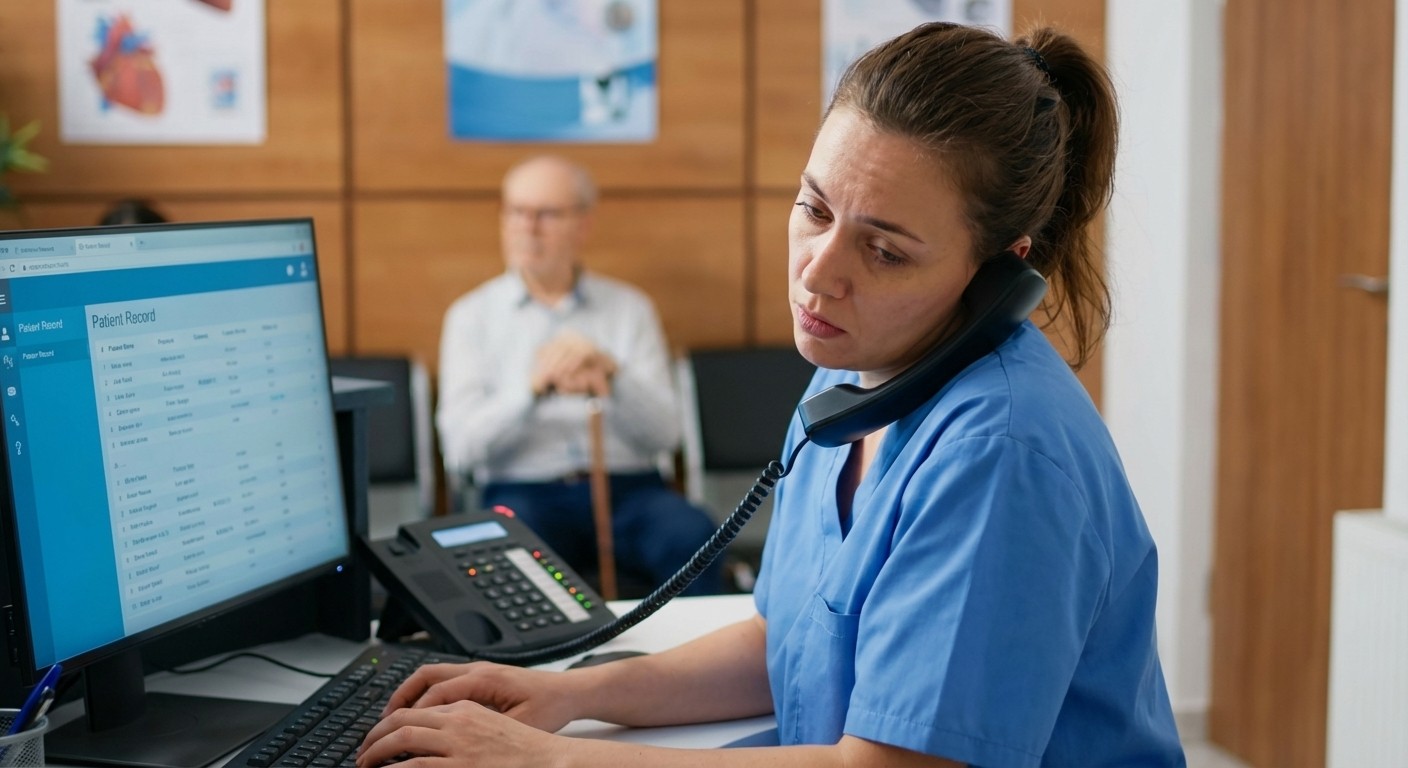
Every minute on the phone is a minute away from patient care
In theory, phone calls seem simple.
In practice, they’re one of the most disruptive parts of clinic operations.
Every minute spent calling back, forwarding requests, clarifying schedules, or rescheduling appointments is a minute not spent with patients waiting in the clinic.
Front desks are forced to constantly switch context - phone, counter, EMR, back to phone. This fragmentation slows clinic flow, frustrates patients, and burns out administrative staff, quietly eroding access to care.
And yet, clinics are often told to simply “hire more staff” - a costly approach with high turnover that doesn’t scale.
The real issue: healthcare communication isn’t designed for volume or variability
The deeper issue is that healthcare communication systems weren’t built for today’s volume or unpredictability. Clinic calls aren’t uniform or transactional. Some are simple, others urgent, emotional, or unclear. Treating them like standard customer support requests doesn’t work, and without safe ways to manage uncertainty and escalate appropriately, even well-run clinics struggle.
What we’re building at TalkToMedi
TalkToMedi is building a clinical-grade AI voice front desk designed specifically for Canadian medical clinics—not to replace staff, but to protect their time and attention.
The system answers calls consistently, even during peak hours, handles common requests like booking and rescheduling, and captures patient messages clearly. It routes complex or urgent cases to staff with proper context and reduces unnecessary callbacks and call forwarding. Built around real clinic workflows, TalkToMedi respects patient tone, pacing, and safety boundaries while fitting seamlessly into existing operations.
Missed calls aren’t just missed appointments.
They’re missed opportunities for timely care.
In Canadian healthcare, the phone line is the front door—and today, that door is often overwhelmed.
At TalkToMedi, we believe fixing healthcare communication is one of the fastest, most practical ways to improve access to care—without waiting for years-long system reform.
Care doesn’t start in the exam room.
Care starts with every call.
And that’s where we’re building.
Changelog