
Insights
Appointment Booking in Canadian Clinics
Comparing What Works, What Breaks, and What Scales
From phone calls and walk-ins to online portals and voice AI, Canadian clinics now juggle multiple booking methods, this article breaks down what works, what fails, and how automation can finally reduce front-desk overload without disrupting care.
Understanding the trade-offs between different booking methods in modern Canadian clinics
For Canadian medical clinics, appointment booking isn’t just a scheduling task, it’s a core operational system that directly affects access to care, staff workload, and patient satisfaction.
Most clinics today rely on a mix of phone calls, online booking portals, and walk-ins. Each method serves a purpose, but each also introduces friction, especially as call volumes rise and patient needs become more complex. Understanding the strengths and limits of these approaches is essential for better clinic management.
Traditional phone calls: familiar, but increasingly unsustainable
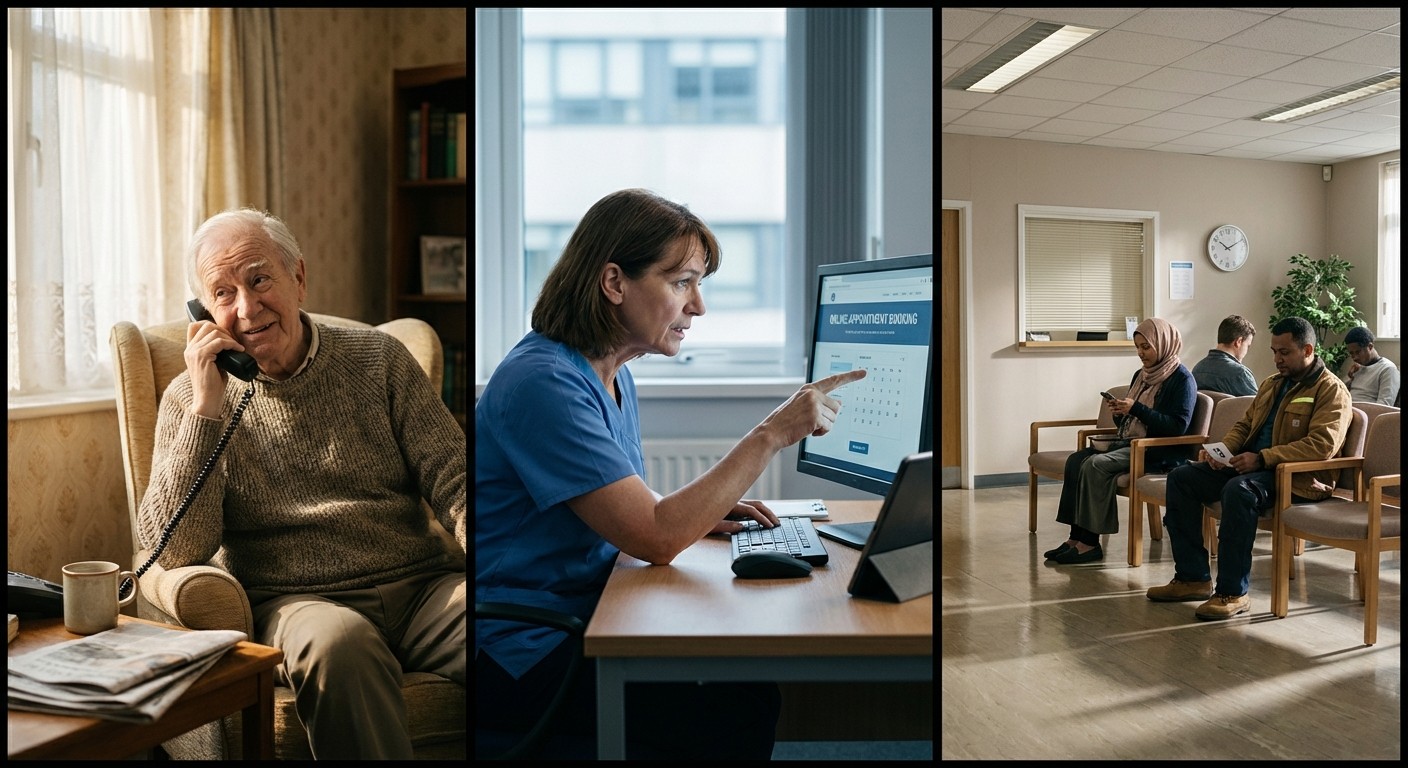
Phone calls remain the most common way patients book appointments because they feel personal and flexible. However, in practice, phone-based booking has become a major operational bottleneck. Morning and lunch-hour peaks lead to long wait times, missed calls, and frustrated patients, while front-desk staff juggle ringing phones, in-person patients, and EMR tasks. Even simple actions like rescheduling or leaving messages take time, and as call volumes grow, the system doesn’t scale—directly impacting patient access.
Online booking portals: efficient in theory, limited in practice
Online booking portals are often introduced to reduce phone load, but their effectiveness is limited. Many patients, especially older adults, find them difficult to navigate, and IVR messages that read out long web links are rarely practical. More importantly, portals struggle with complexity: they can’t easily handle nuanced requests, different appointment lengths, or fitting patients into tight schedules. As a result, they only cover a partial subset of bookings, pushing most real-world requests back to the phone.
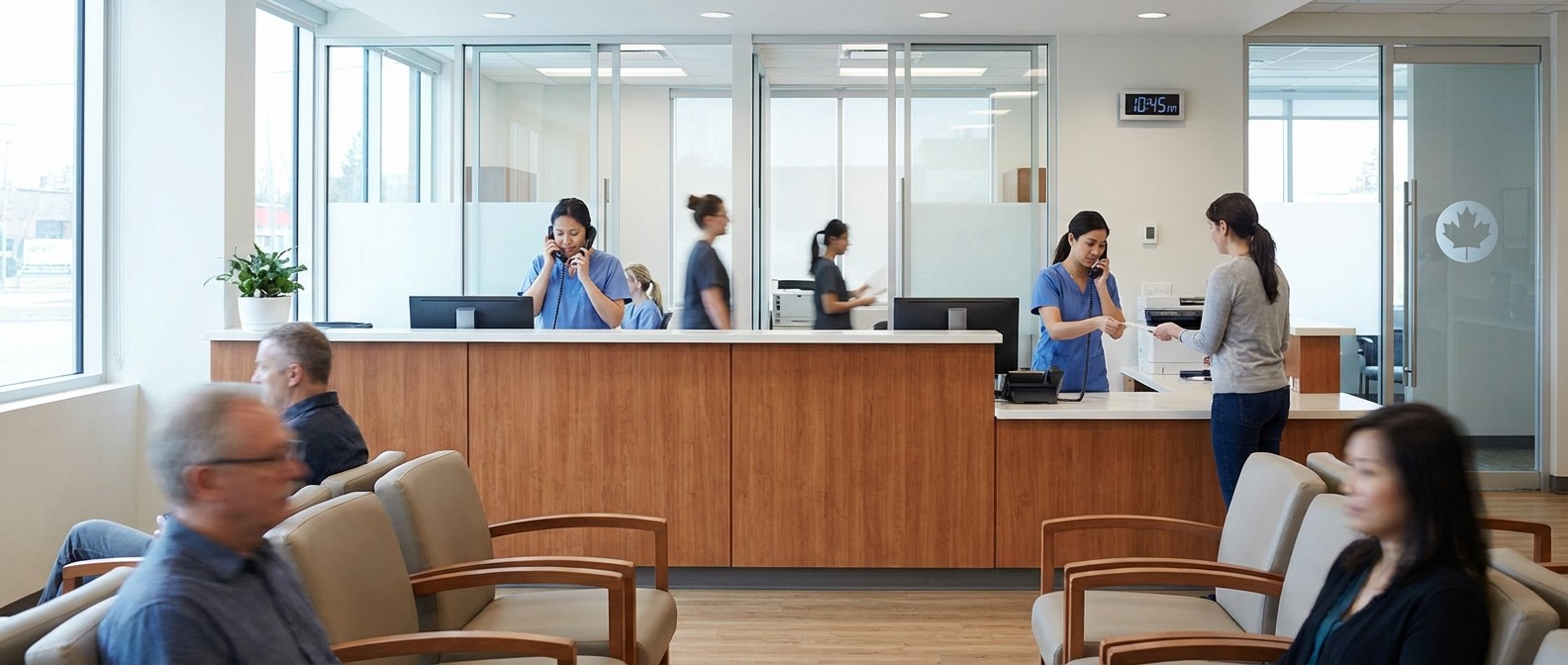
Walk-ins provide immediacy but introduce unpredictability. They lead to long waits, disrupt planned schedules, and add strain to front-desk staff and clinicians. From an operational standpoint, walk-ins make it harder for clinics to manage flow, staffing, and patient expectations—especially in high-demand settings.
The reality: no single method is sufficient on its own
Each booking method exists for a reason, but none is designed to handle today’s volume, variability, and patient expectations on its own. Relying too heavily on any one channel creates friction, either for patients, staff, or both.
What clinics need is not a replacement for existing methods, but a better balance.

How TalkToMedi fits into clinic booking workflows
TalkToMedi is designed as a smart, automated booking layer that complements, not replaces traditional phone calls, online portals, and walk-ins.
It gives patients an additional option when phone lines are busy or portals are inconvenient, while relieving pressure on front-desk staff during peak periods. TalkToMedi can handle routine booking and rescheduling requests, capture clear patient messages, and offer call-back options when staff are unavailable, all without forcing patients to wait on hold.
Why this matters for clinic managers and operations teams
From an operational standpoint, TalkToMedi is built specifically for clinic use cases:
Cost-efficient support for the front desk without hiring additional staff
Voice-based interaction that works for elderly patients and those uncomfortable with online portals
Flexible handling of complex requests, instead of rigid booking forms
Clear escalation rules for urgent or unclear cases
A smarter layer, not just another channel
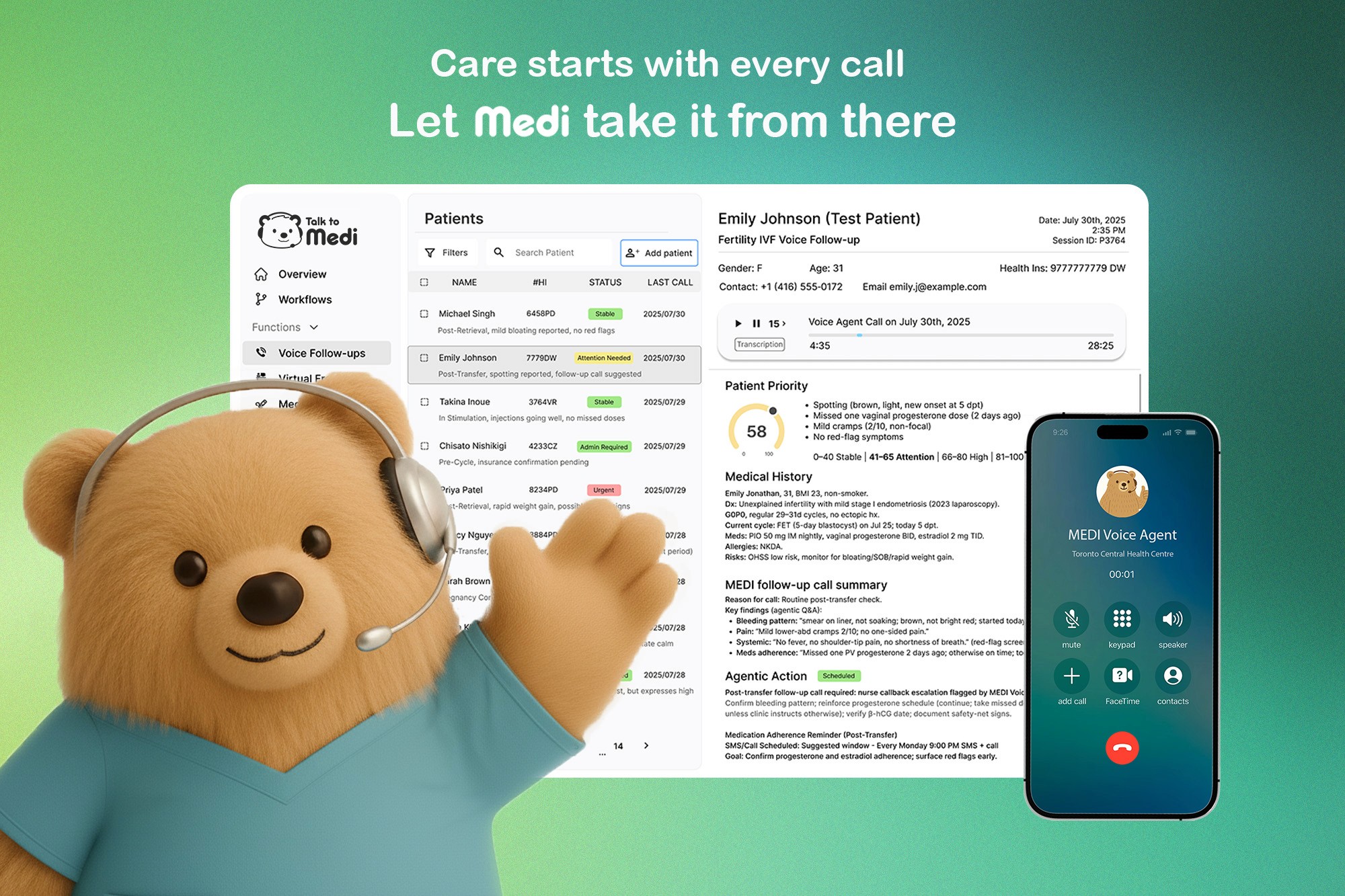
What makes TalkToMedi different isn’t just automation—it’s intelligence. By understanding why patients are calling, prioritizing urgency, and fitting into real clinic workflows, TalkToMedi transforms appointment booking from a reactive task into a manageable system.
Beyond booking, TalkToMedi provides insights that traditional methods cannot. Clinics gain access to dashboards showing call volume patterns, patient intent, and peak times. Voicemails are converted into readable transcripts, messages are structured and prioritized, and urgent cases are surfaced clearly. Patients can leave messages and receive call-backs without repeatedly calling the clinic, reducing frustration on both sides.
For clinics facing rising demand, staffing constraints, and growing patient expectations, smarter booking isn’t about choosing one method over another. It’s about adding the right layer to make the entire system work better.
Changelog