
Updates
TalkToMedi: The University of Toronto Spinout Building Patient Access Infrastructure
TalkToMedi is a U of T spinout focused on one of healthcare’s most operationally overlooked problems: what happens when patients cannot reach their clinic. Built by a founding team with deep technical training and shaped through real clinic exposure, the company is building infrastructure for patient access, not just another workflow tool.
TalkToMedi: The University of Toronto Spinout Building Patient Access Infrastructure
TalkToMedi is tackling a problem that most patients recognize immediately and most healthcare systems still underestimate: getting through to care.
Built by a team of University of Toronto-trained founders with backgrounds in engineering and computer science, the company is focused on a part of healthcare that is easy to dismiss as administrative until it fails. When clinic phone lines jam, when staff are overwhelmed, and when patient requests go unanswered, access to care starts to depend less on need and more on timing.
TalkToMedi’s view is that this is not just a staffing issue. It is an infrastructure issue.
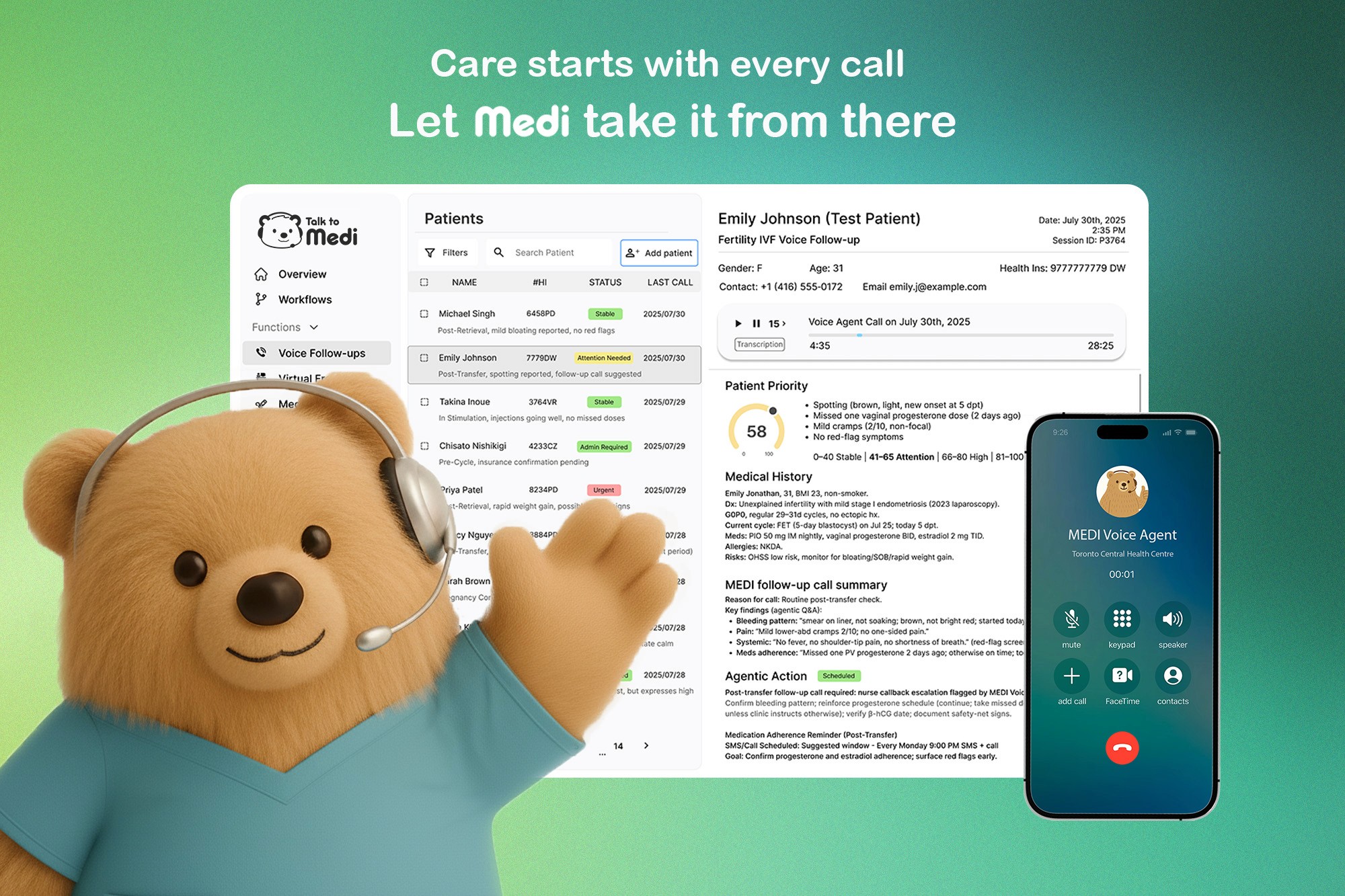
The company has built a clinical-grade medical voice agent that helps clinics capture, triage, and respond to patient requests in real time. Instead of letting demand disappear into voicemail, missed calls, or callback backlogs, the system is designed to create a more consistent front door for care.
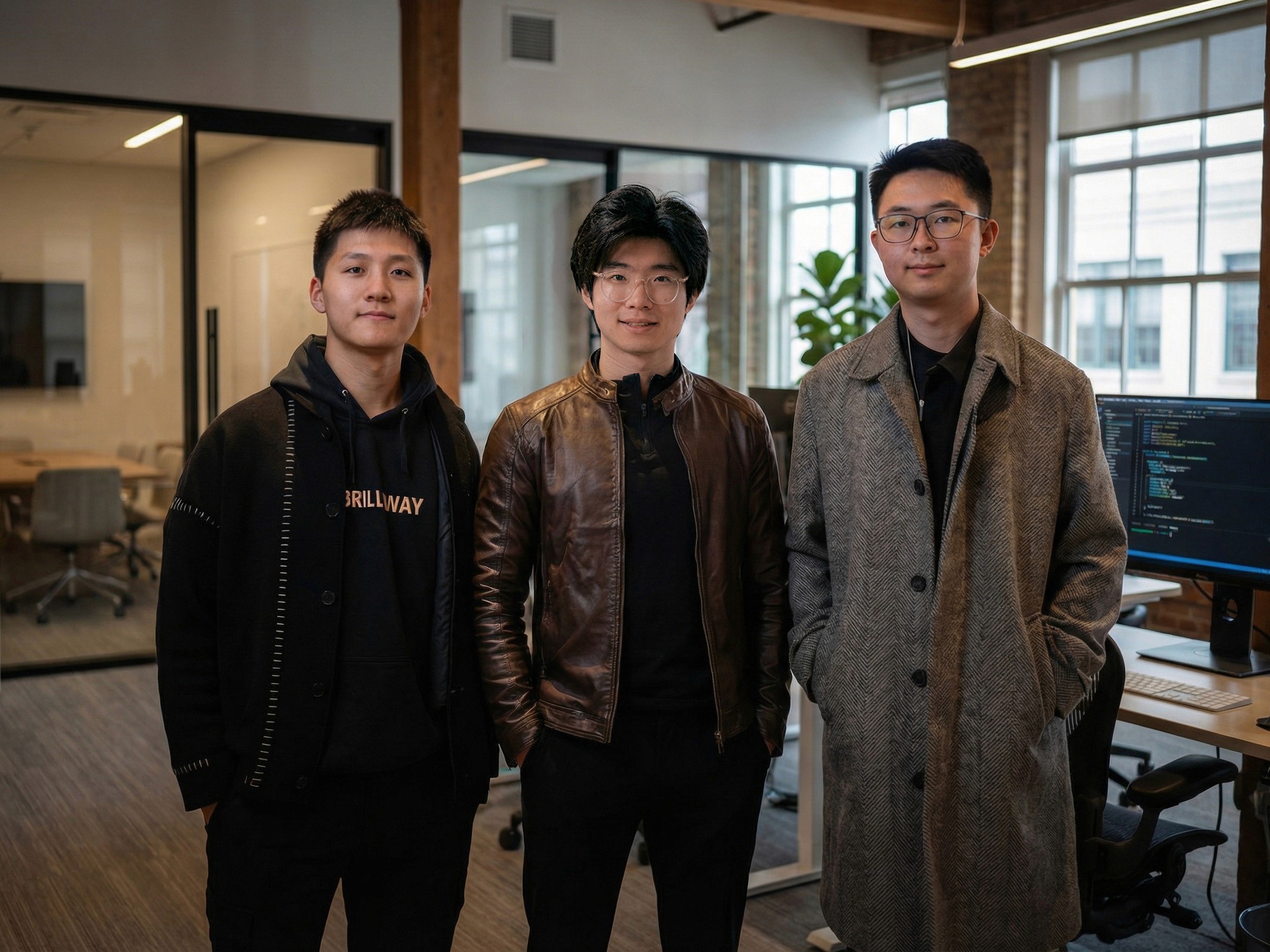
TalkToMedi Founding Team (Left to Right): Alvin Cheng, Kino Song, and Haoran Liu.
From personal loss to a systems problem
The work began with a personal experience.
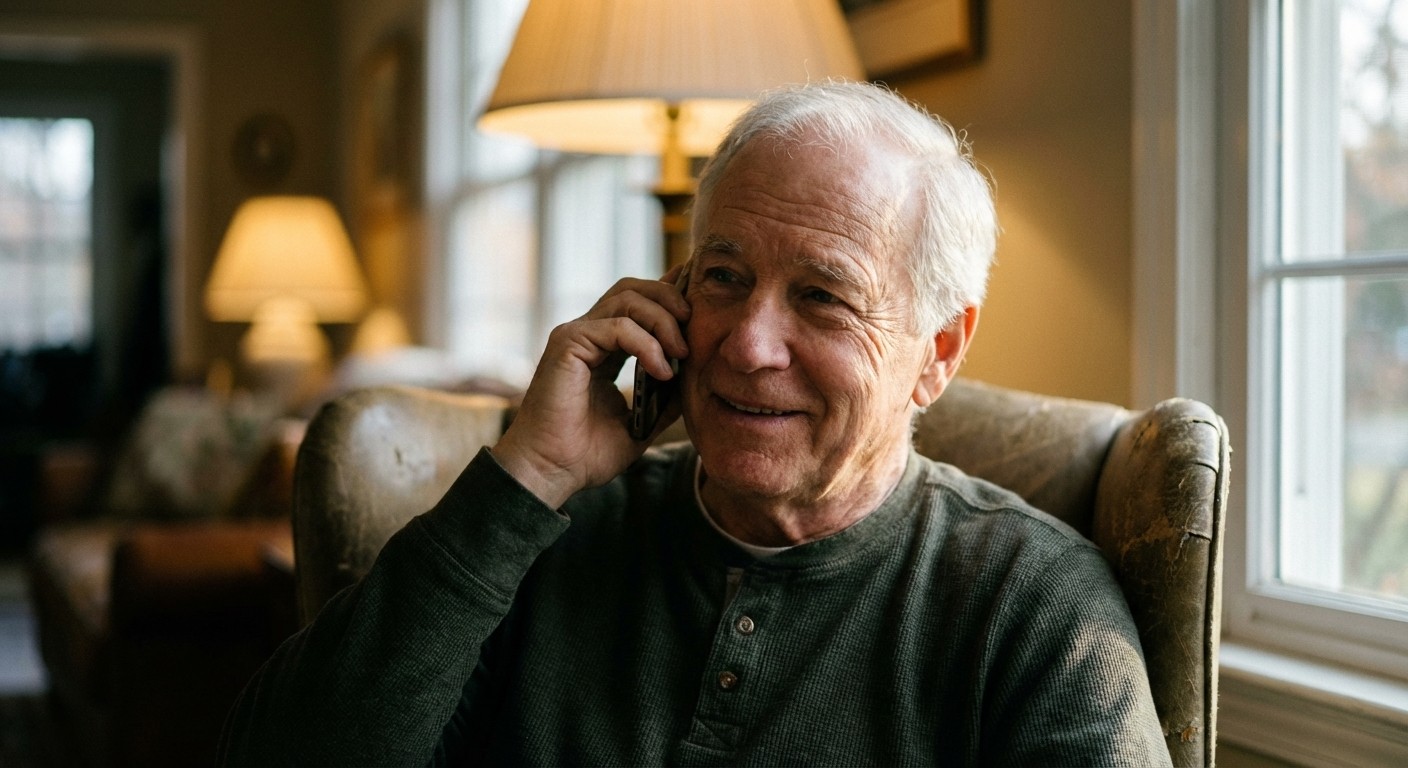
After a family member died following a missed follow-up call, the team began looking more closely at how those failures happen inside real care settings. What they found was not a single breakdown, but a repeated structural pattern: too many patients trying to reach one front desk at the same time, with too little overflow capacity built into the system.
That insight changed the frame of the problem.
What looks, from the outside, like a scheduling or staffing issue often behaves more like a queueing problem. The demand arrives in spikes. The front desk can only absorb so much. And when the system breaks, patient needs do not disappear — they simply return later in more costly, more urgent forms.
Why the team sees this as infrastructure
TalkToMedi’s product approach reflects that diagnosis.
The company is not positioning its voice agent as a replacement for staff. It is building a layer of operational support that helps clinics handle patient communication more reliably, especially when demand is concentrated and time-sensitive.
That includes answering common calls, guiding patients to the right next step, supporting appointment booking, handling routine administrative requests, and integrating into clinic workflows so information can be acted on instead of lost.
The point is not just automation. It is continuity.
When patient communication is treated as infrastructure, the goal changes. It is no longer simply to reduce workload. It is to make sure every legitimate patient request reaches the clinic in a form the clinic can actually manage.
Built in real clinical environments
Through the Health Innovation Hub (H2i) at U of T, the team gained access to mentorship, practical support, and clinical exposure that helped move the product from concept to deployment.
That environment mattered because patient access is difficult to understand from the whiteboard alone. It becomes clearer when you watch clinic staff navigate simultaneous calls, in-person patients, physician preferences, and endless administrative handoffs in real time.
That is where TalkToMedi’s product direction sharpened. The team saw that many of the most painful operational failures happen at the earliest point in the patient journey: the first call, the missed callback, the unanswered question, the booking request that never reaches the right person.
Today, the company says it has signed 50 clinics, processed more than 40,000 patient calls, achieved a 93 percent success rate in resolving inquiries without manual intervention, and saved more than 500 staff-hours per clinic annually. In the past month alone, it reports 5x usage growth across deployments.
From AI Agents to Patient Access Infrastructure
TalkToMedi’s roadmap is most compelling when it stays close to that original problem.
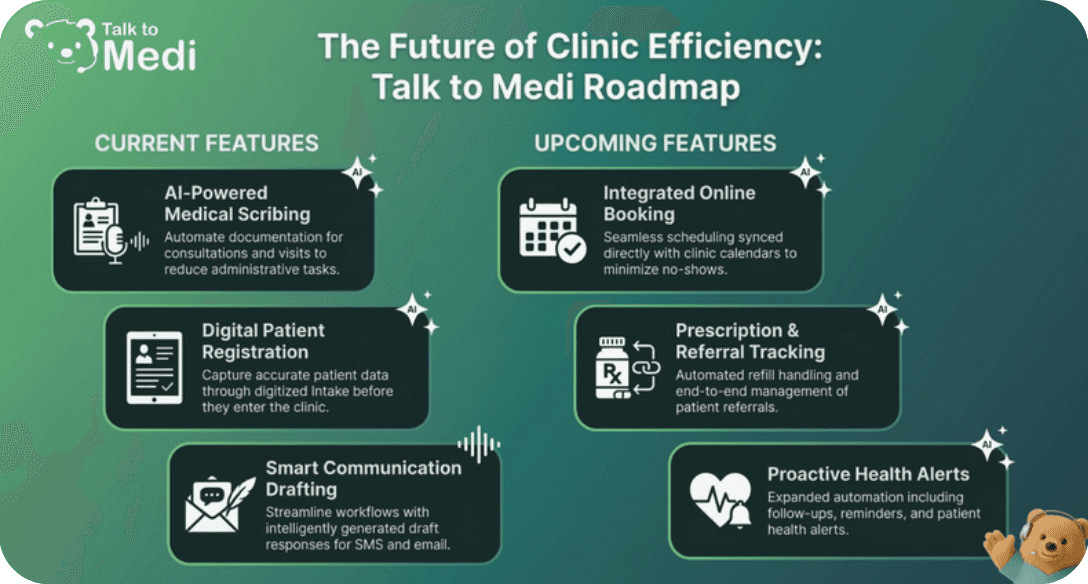
The platform began with real-time call handling and triage, but the broader ambition is to reduce the friction that accumulates around the front desk: booking, follow-up communication, documentation support, patient intake, and other recurring tasks that pull staff away from work requiring judgment and empathy.
That focus is important.
Many healthcare AI companies talk broadly about transformation. TalkToMedi’s framing is narrower and, because of that, more believable: improve the system around first contact so clinics can stop losing patients before care has even begun.
A stronger front door for care
Healthcare systems do not only break at the point of diagnosis or treatment. They also break at the point of access.
That is why patient access deserves to be treated as infrastructure, not overhead.
TalkToMedi is building in that space with the perspective of a young technical team that has spent time close enough to clinic operations to see how fragile the front door still is. The result is a company trying to make one part of healthcare more dependable: the moment a patient reaches out.
That is not the whole system. But it is where the relationship starts.
And if that first touchpoint fails, everything downstream gets harder.
Changelog