

Updates
Case Study: How a Markham Clinic Recovered Hundreds of Missed Calls
In this story, we look at how a Markham clinic transformed missed calls into meaningful patient connections by using Medi, an AI voice assistant that listens, responds, and supports both patients and front-desk teams when it matters most.
How a Markham Clinic Recovered Hundreds of Missed Calls Each Week with AI
In primary care clinics, phone calls are still the front door to care. Patients call to book appointments, ask questions, follow up on test results, clarify prescriptions, or simply try to reach someone who knows their situation.
But in reality, that front door is often overloaded.
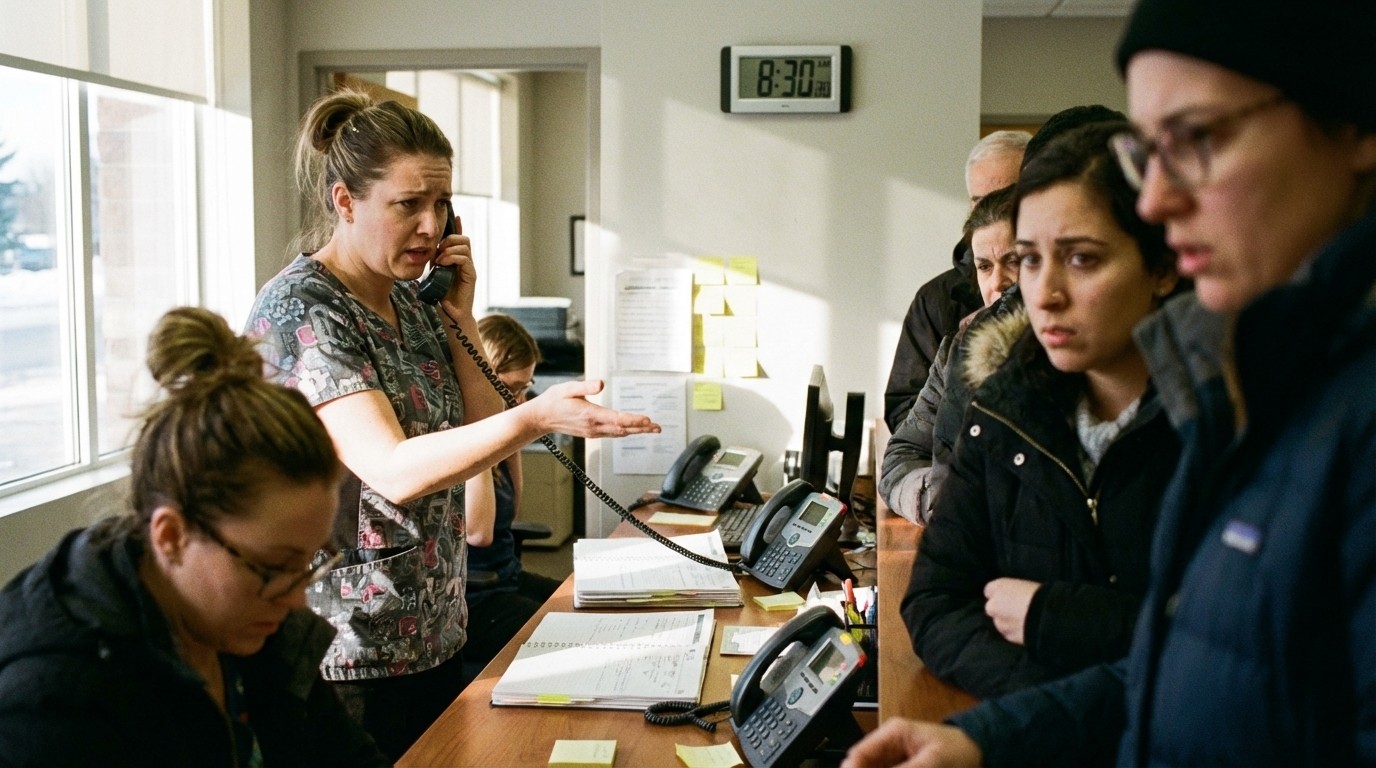
At a busy family clinic in Markham, peak call times routinely collided with limited front-desk capacity, mornings, lunch hours, after 4 PM, and even late evenings. Like many clinics, staff were forced to juggle in-person patients, EMR tasks, and a constantly ringing phone. The result? Hundreds of calls going unanswered or cut short each week, not due to lack of care, but lack of time.
To address this, the clinic piloted Medi, an AI-powered voice assistant designed specifically for clinical front-desk workflows.
This case study summarizes what happened next.
The Hidden Cost of Missed Calls in Clinics
Before Medi, the clinic faced a familiar pattern:
Phones spiking early morning as patients tried to book same-day appointments
Another surge during lunch hours, when staffing was thinnest
A steady stream of calls after 4 PM, once patients finished work
And surprisingly, late-evening and nighttime calls, when no one was available to answer
Each missed call represented more than inconvenience:
Delayed care
Patient frustration
Extra follow-up work for staff
Lost revenue for walk-in patient and lost confidence from the community
Many of these callers never called back.
What Changed with Medi
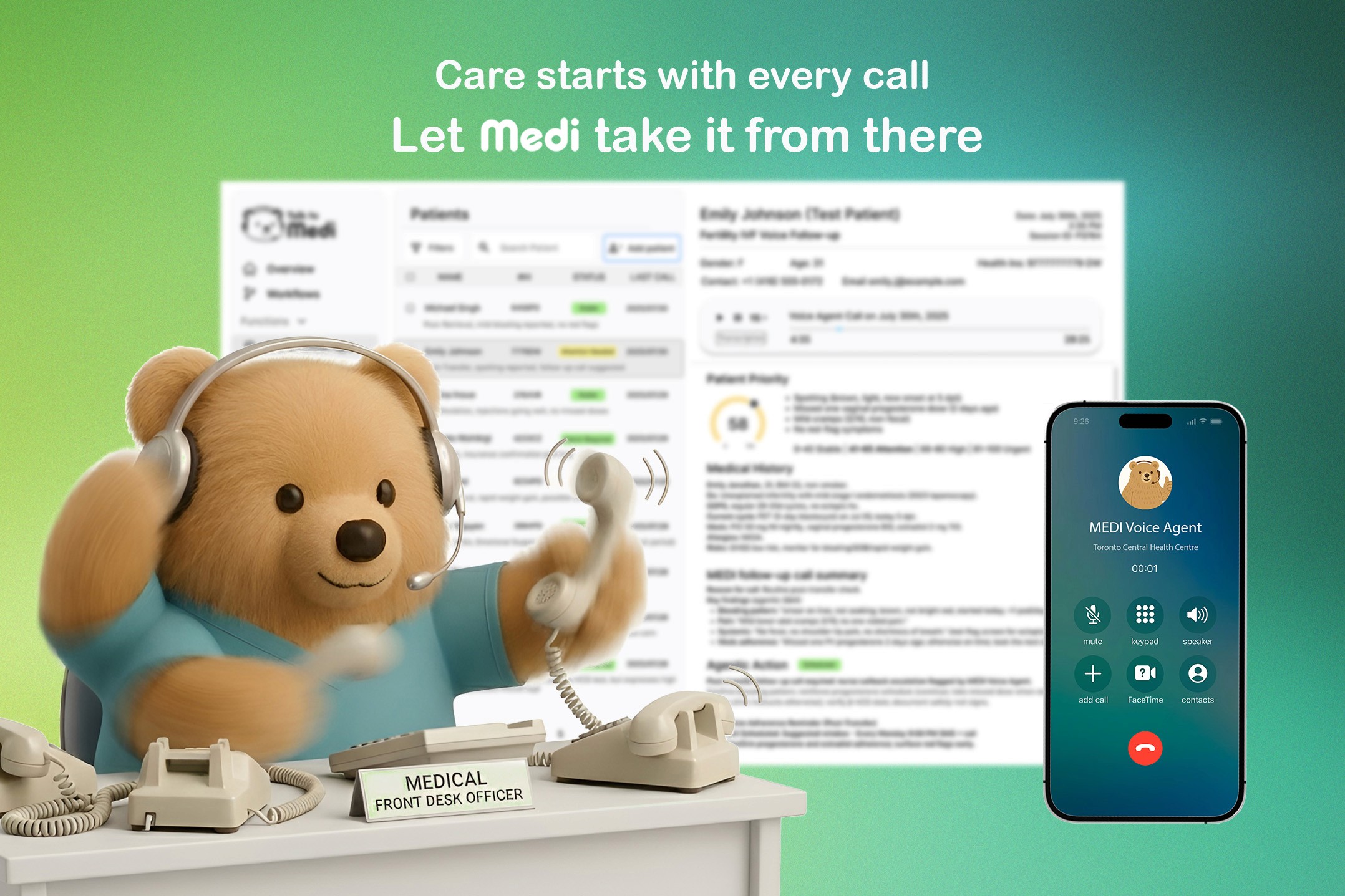
Once Medi was introduced, every incoming call when the front desk is not available was answered immediately, no hold music, no voicemail prompts, no unanswered ringing.
Instead of forcing every caller down a single path, Medi listened and responded based on what the patient actually needed.
Across several hundred calls per week, Medi handled a wide range of requests:
Appointment booking and rescheduling
General clinic questions (hours, availability, next steps)
Requests to speak with the front desk or care team
Securely recorded a message, ranked it by urgency, and notified staff to follow up when available
This flexibility turned what used to be missed or rushed interactions into structured, actionable communication.
Patient Experience: “At Least Someone Picked Up”
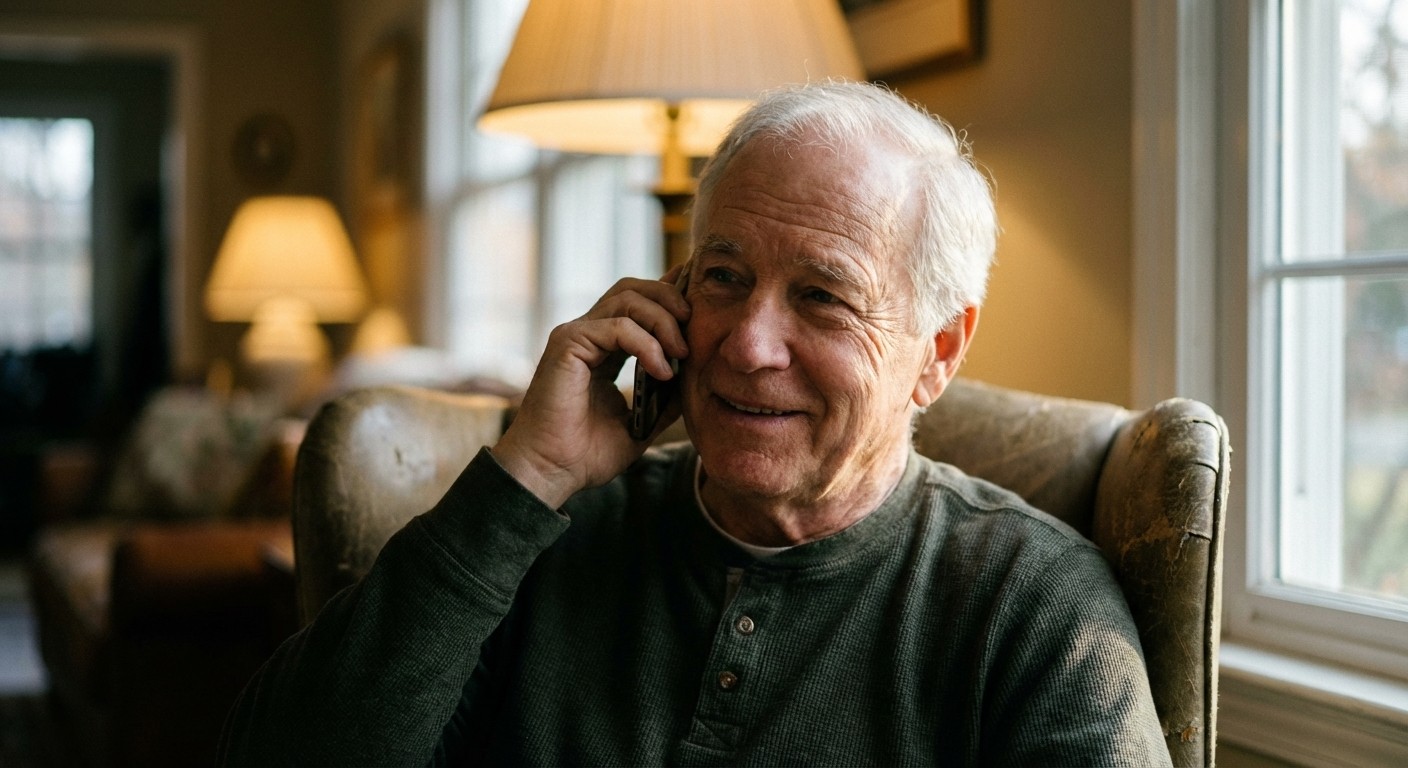
One of the most immediate changes was how patients reacted.
From call transcripts during the pilot, patients frequently expressed relief simply at being heard:
“Oh, that helps. Thank you.”
“Hi, I just wanted to leave a message.”
“Okay, that makes sense. I will wait for the call back.”
Even when Medi routed calls to staff, patients were no longer starting from zero. Their reason for calling, contact details, and urgency were already captured.
For patients, that meant:
More direct support with an automated system
Clear expectations about next steps
And reassurance that their concern wasn’t lost
Clinical Impact: Support, Not Replacement
For the clinical team, Medi didn’t replace the front desk, it supported it.
Instead of dealing with a wall of missed calls and voicemails, staff received:
Structured callback requests
Clear summaries of why the patient called
Prioritized follow-ups based on urgency
This allowed the team to return calls when they were actually available, with context already in hand.
Over time, the clinic observed a 93% successful handling rate, meaning the vast majority of calls were either resolved directly or routed appropriately. That number continues to improve as Medi learns from past interactions and adapts to the clinic’s workflows.
The more the clinical team uses Medi, the smarter the system becomes, refining prompts, improving routing decisions, and continuously learning from real-world cases.
The Bigger Picture: Access, Not Automation
This case wasn’t about automation for its own sake. It was about access.
Medi ensured that:
Patients were acknowledged when they reached out
Clinics didn’t lose critical communication during peak times
Front-desk teams could focus on patients in front of them without sacrificing those on the phone
In a system where demand continues to rise and staffing remains constrained, tools like Medi don’t just save time, they protect the patient-clinic relationship.
As one clinic manager put it after reviewing the data:
“It’s not that we didn’t want to answer the phone. We just couldn’t. This finally closes that gap.”
Changelog